How I Work With Buyers and Sellers
By Brenda Birch, real estate agent with Mountain Retreat Real Estate LLC, Soda Springs, Idaho · Updated [publish date] · About a 9-minute read
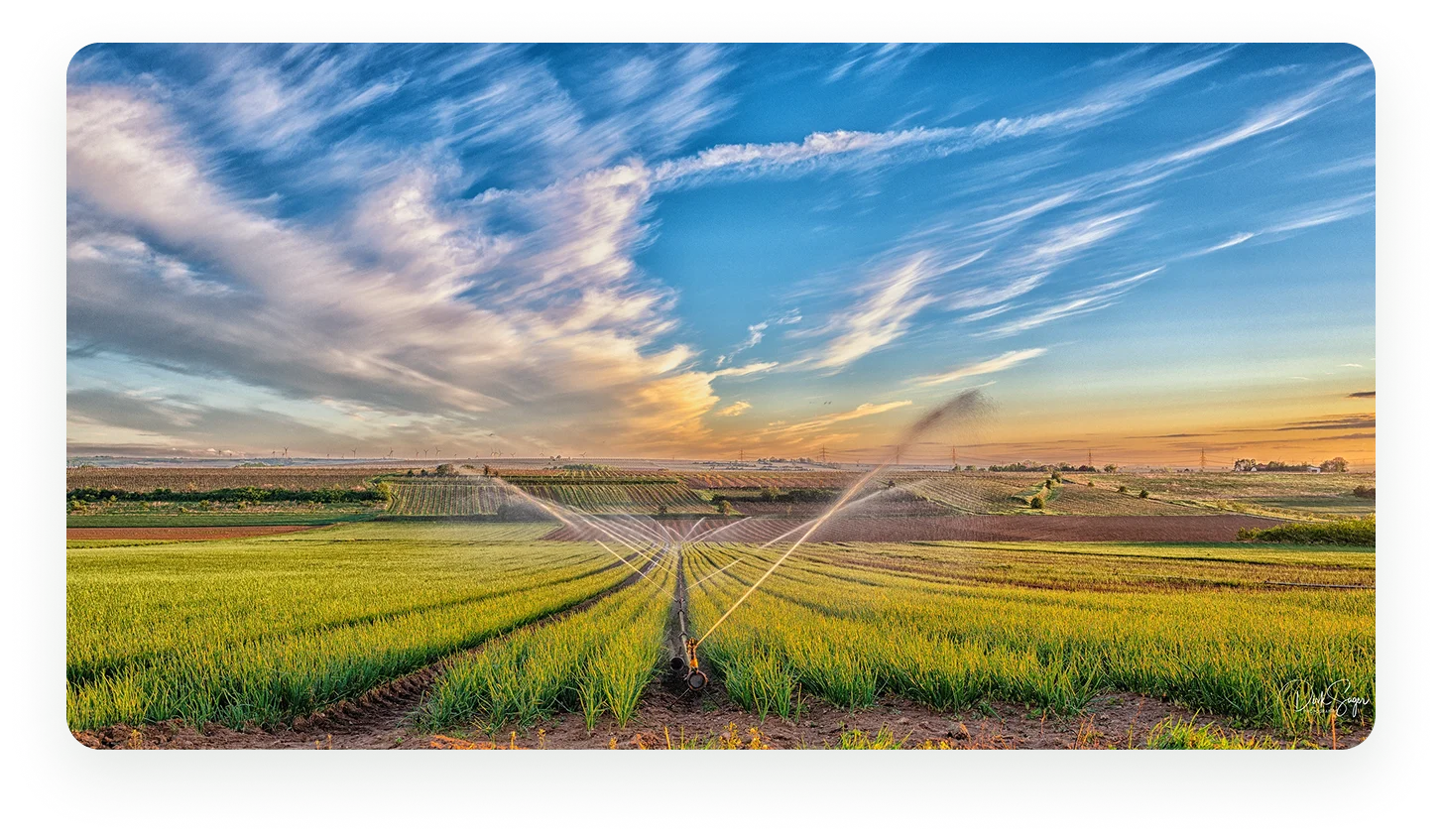
A few acres with a mountain view is one of the best things about living in Southeast Idaho. It is also one of the easiest purchases to get wrong. Raw land doesn’t come with a home inspection that flags every problem, and the issues that matter most—water, septic, access and zoning—are invisible from the road.
This checklist walks through what to verify before you buy land or rural property in Idaho, with notes specific to Caribou and Bear Lake counties, including Soda Springs, Grace, Georgetown, Montpelier and Bennington. It is general information, not legal advice; for a specific parcel, confirm each item with the agency named and, where needed, a real estate attorney.
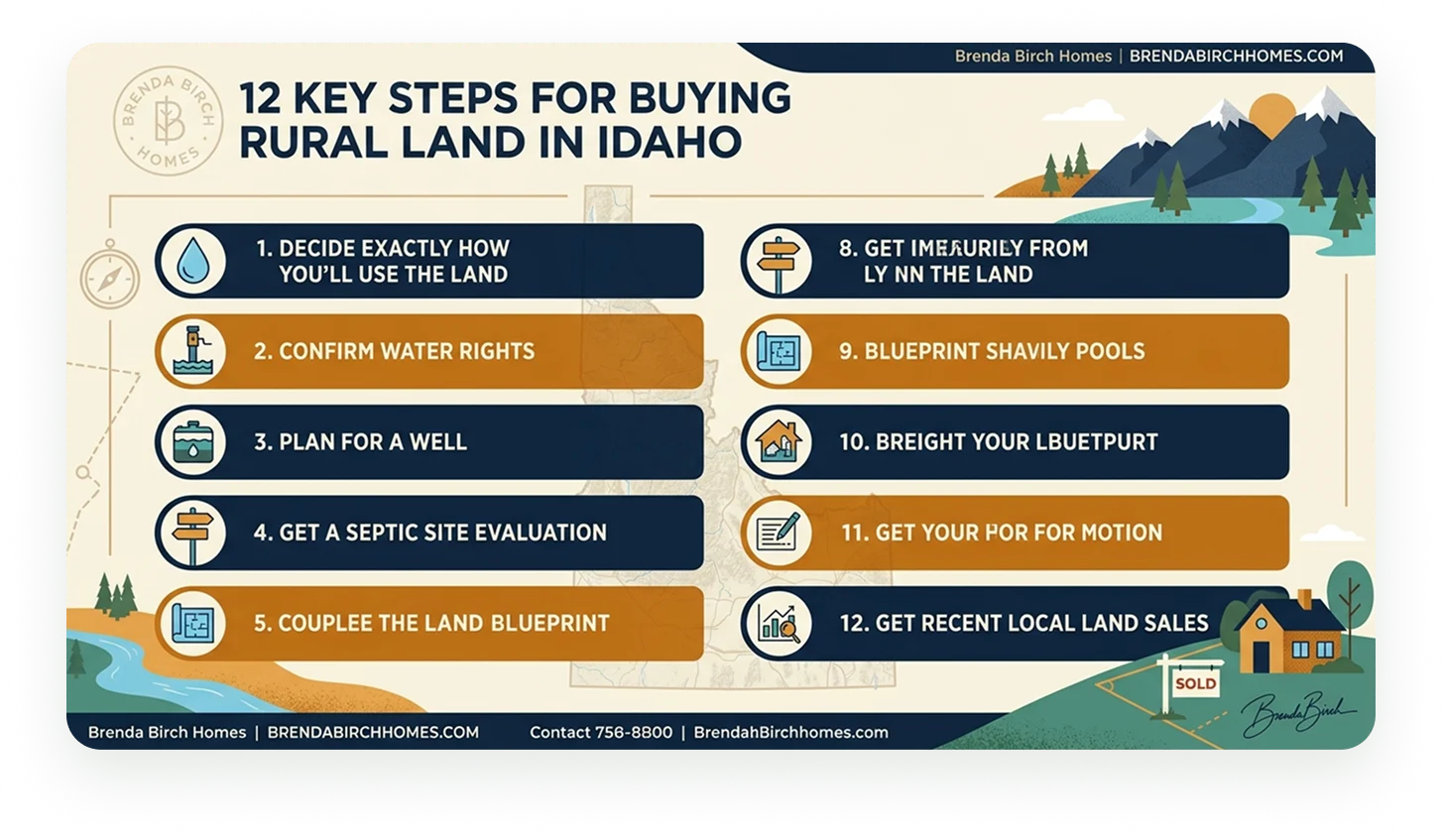
Quick checklist: buying land in Idaho
- ● Decide exactly how you’ll use the land
- ● Confirm water rights in the IDWR database and in the purchase contract
- ● Plan for a well: depth, cost and a licensed driller
- ● Get a septic site evaluation from Southeastern Idaho Public Health
- ● Verify legal, year-round access (recorded easement or public road)
- ● Check county zoning, building permits and split rules
- ● Confirm power, propane or gas, and internet at the parcel
- ● Order a boundary survey
- ● Review the title report, easements and mineral rights
- ● Check flood zone, slope, soils and wildfire exposure
- ● Line up land financing early
- ● Get recent local land sales before making an offer
1. Start with how you'll use the land
Every other item on this list depends on your plans. A cabin you’ll visit in summer, a year-round family home, a few horses, a hay field and a shop for your business all have different requirements for water, septic, road access and zoning. Write down what you want to build and do on the property in the next five years, then check each parcel against that list rather than against the view.
It also helps to decide early whether you need to be inside a city’s limits. In-town lots in Soda Springs or Montpelier may have city water and sewer available; a parcel a few miles out almost certainly won’t.
2. Water rights: confirm them before you fall in love
Water is the single biggest value factor for rural land in Idaho, and it’s where buyers make the most expensive assumptions. A creek, a pond or an old well on the property does not by itself prove you have a legal right to use that water.
How Idaho water rights work
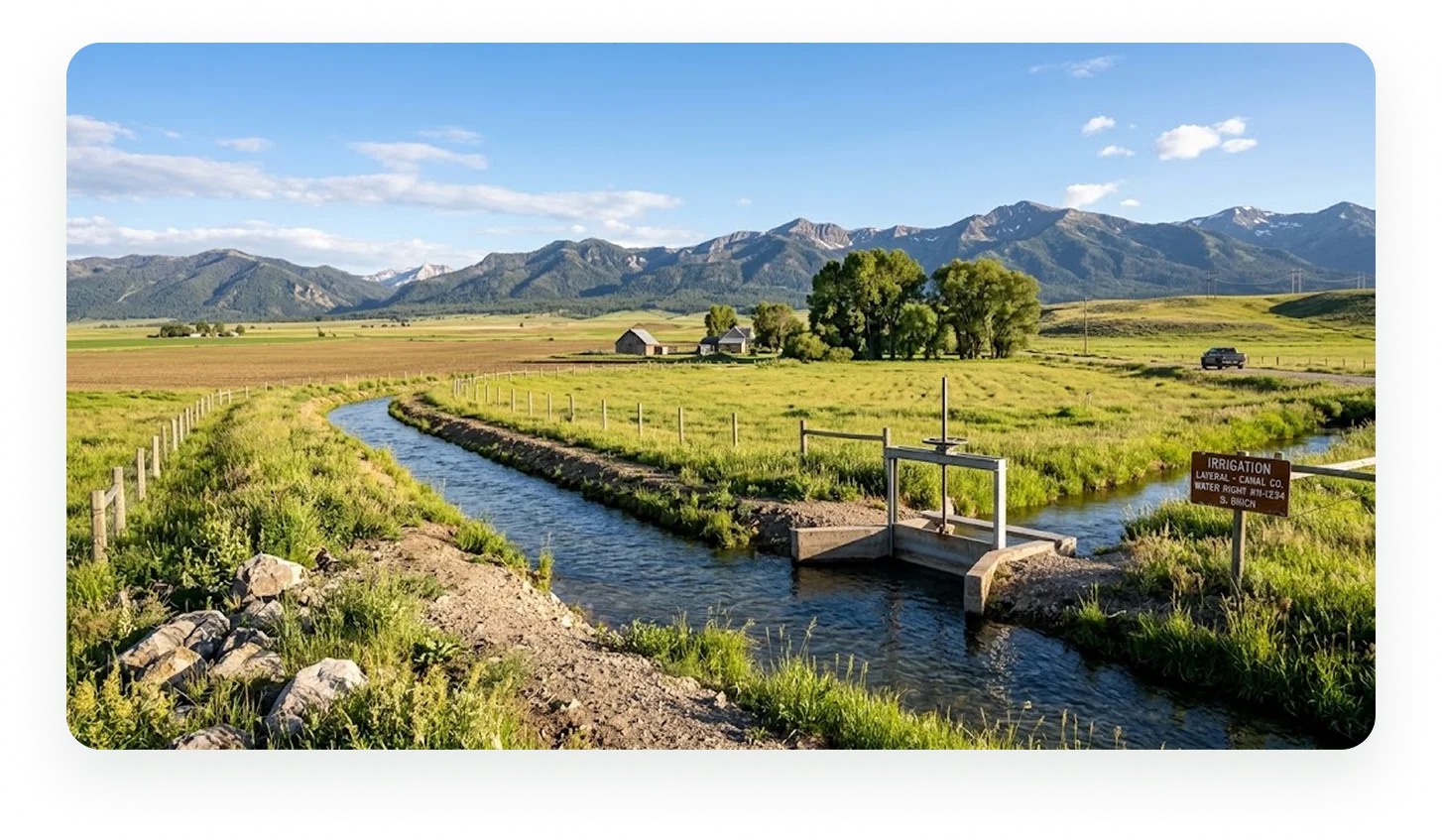
Idaho follows the prior appropriation doctrine—”first in time, first in right.” Each water right has a priority date, a source, a permitted use (such as irrigation or stock water) and limits on quantity and season. In a dry year, holders of older (senior) rights receive their water before newer (junior) rights. Water rights can also be lost through forfeiture if they go unused for five consecutive years, subject to exceptions in state law.
What to check
- Search the parcel and the seller’s name in the Idaho Department of Water Resources (IDWR) online water right records
- Note each right’s priority date, source, use, quantity and place of use
- Ask whether the water has actually been used every year
- Make sure the purchase agreement and deed list exactly which water rights are included
- After closing, file the change-of-ownership notice with IDWR so the record shows you as the owner (check IDWR’s current form and deadline)
Domestic wells and irrigation shares
A well serving a single home is generally exempt from needing a separate water right permit in Idaho, as long as total use stays within the domestic limit—up to 13,000 gallons per day, including irrigation of up to half an acre of lawn and garden. Watering pasture or larger acreage needs an actual water right. If the property gets water from a canal or ditch company, ask for the share certificate, the annual assessment, and the delivery schedule, and confirm the shares transfer with the land.
3. Wells: depth, yield and who drills
If there’s no existing well, budget for one before you make an offer. Well depth and drilling cost vary a lot across Southeast Idaho depending on the location and geology, so ask a licensed Idaho well driller for an estimate for that specific area and look up well logs for nearby properties in IDWR’s records—they show how deep neighbors had to drill and what they found. The driller handles the required well construction authorization from IDWR before drilling.
If there is a well, ask for the well log, the age of the pump and pressure tank, and a recent flow test and water quality test (at minimum coliform bacteria and nitrates). Most mortgage lenders require these on properties with private wells.
4. Septic: get a site evaluation before you buy
Outside city sewer service, you’ll need a septic system, and not every piece of ground can support one. In Idaho, on-site septic systems are permitted by the local public health district under state rules; for Caribou and Bear Lake counties, that’s Southeastern Idaho Public Health (SIPH).
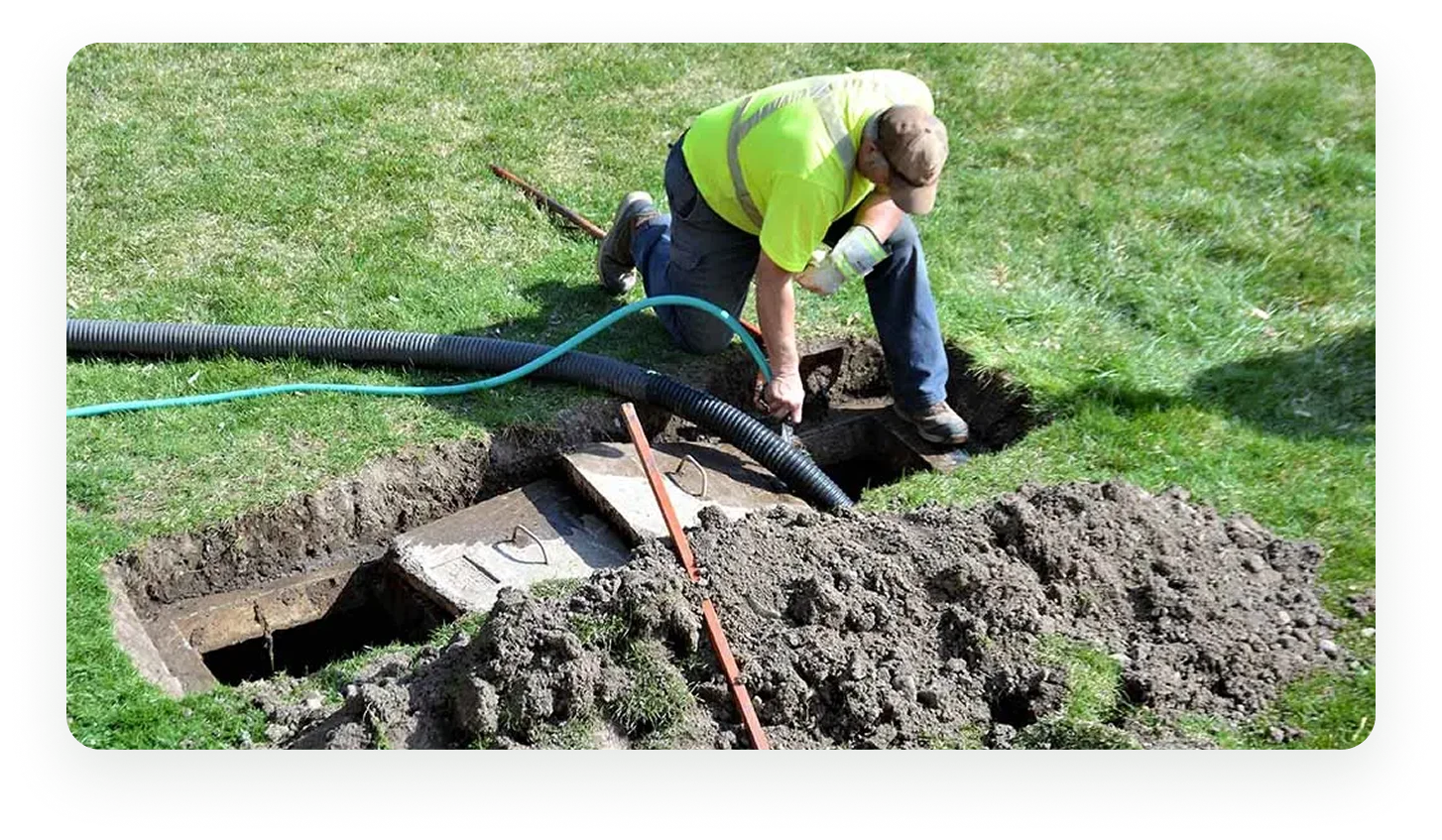
For bare land, the key step is a site evaluation: test holes are dug so the health district can look at soil type and depth to groundwater or bedrock. The result determines whether a standard system is allowed, whether an engineered system is needed, and where it can go. Make your offer contingent on a satisfactory site evaluation. For land with an existing home, hire a septic contractor to locate the tank, pump it and inspect the drain field—an ordinary home inspection doesn’t do that.
5. Legal and physical access
You need both a legal right to reach the land and a road you can actually use. Confirm that the parcel touches a public road or has a recorded easement across the neighboring property; a handshake path or “everyone uses it” is not enough. The title report and survey should show any access easements.
Then think about winter. Snow is part of life at this elevation, and a county is generally responsible only for the roads it maintains. Ask who plows the private road or long driveway, whether there’s a written road maintenance agreement, and how the road holds up during spring thaw. Emergency service access and school bus routes are worth asking about too.
6. Zoning, building permits and splitting land
Zoning decides whether you can build what you want. Call the planning and zoning office for the county—or the city, if the parcel is inside city limits—and ask:
- What zone is this parcel in, and what’s the minimum lot size for a home?
- Are manufactured homes, shops, short-term rentals or livestock allowed?
- What setbacks apply from roads, property lines and water?
- Was this parcel created legally? (Parcels split without approval can be hard to permit.)
- What are the rules if I want to divide the land later?
If the land is in a subdivision, read the recorded covenants (CC&Rs). They can limit building size, fencing, animals and outbuildings even when zoning allows them.
7. Utilities: power, heat and internet
Ask the electric utility that serves the parcel where the nearest power is and what it would cost to bring service to your building site; long line extensions can cost more than buyers expect. Confirm whether natural gas is available or whether you’d rely on propane, wood or electric heat. For internet and mobile service, check providers by the exact address—coverage can change from one side of a valley to the other.
8. Survey, title and mineral rights
Order a boundary survey unless a recent one exists and the corners can be located. It confirms what you’re buying, reveals encroachments such as a neighbor’s fence or shed, and shows easements. Review the preliminary title report with care: it lists liens, easements, rights-of-way and any reservations.
Mining has a long history in this part of Idaho, so ask whether the mineral rights have been separated from the surface rights. If they have, find out who owns them and what that could mean for your use of the land.
9. Natural hazards and the ground itself
Check the FEMA flood map for the parcel, especially near rivers, creeks and reservoirs. Use the USDA Web Soil Survey to see soil types, which affect septic, building and farming. Walk the property in more than one season if you can: slopes, wet spots and drainage problems are easiest to see in spring. On forested or brushy land, ask about wildfire risk and what defensible space and insurance would cost.
10. Financing land
Land loans work differently from home mortgages. Lenders often ask for a larger down payment and may offer shorter terms, and requirements vary between banks, credit unions and agricultural lenders such as Farm Credit institutions. Talk to a lender before you start making offers so you know your budget, and ask whether they lend on bare land, land with a planned build, or only on land with a home already on it.
How much is an acre of land worth in Southeast Idaho?
There’s no single per-acre price. Value depends on water rights, access, power, buildability, views, size and distance from town—two parcels a mile apart can be priced very differently. The only reliable guide is recent sales of similar land nearby.
For the bigger picture, see the latest Caribou and Bear Lake County market update.
Do you need a realtor to buy land in Idaho?
No—Idaho doesn’t require you to use an agent to buy land. But the seller’s agent represents the seller, not you, and most of the work on raw land is due diligence: water rights, septic feasibility, access, zoning and comparable sales. A local agent who works with rural property can help you ask the right questions, set the right contingencies and keep the timeline realistic. Learn more about Brenda’s help with land and rural property, or read how long a home purchase takes in Idaho if you’re buying land with a home on it.
Frequently Asked Questions
Do water rights transfer with land in Idaho?
A water right tied to a property generally passes with it unless it is reserved or sold separately, but you shouldn’t assume. Confirm the rights in IDWR’s records, list them in the purchase agreement and deed, and file the ownership change with IDWR after closing.
Do I need a water right for a household well?
A well serving a single home is generally exempt from a separate water right permit if use stays within Idaho’s domestic limit of 13,000 gallons per day, including up to half an acre of irrigation. Larger irrigation needs a water right.
Who issues septic permits in Caribou and Bear Lake counties?
Southeastern Idaho Public Health. For bare land, ask for a site evaluation before you commit to the purchase.
What is the first thing to do when buying land?
Define how you’ll use the land, then confirm water, septic feasibility, access and zoning for that use before you negotiate price.
Thinking about land near Soda Springs or the Bear Lake Valley?
Land is a big decision with a lot of moving parts. If you’re considering property in Caribou or Bear Lake County—or moving to Soda Springs and want space around you—Brenda can help you work through this checklist for the specific parcels you’re looking at.
Talk to Brenda about buying land

Brenda Birch
Brenda Birch is a real estate agent with Mountain Retreat Real Estate LLC in Soda Springs, Idaho, serving buyers and sellers in Caribou and Bear Lake counties.
More About brenda
More Southeast Idaho Guides
buying-land-in-idaho-a-checklist-for-southeast-idaho-buyers

How Long Does It Take to Buy a House in Idaho? A Step-by-Step Timeline
Southeast Idaho Housing Market Update: Soda Springs, Montpelier and Nearby Towns